- 07 Jan, 2026

Nepal is home to eight of the fourteen highest mountains in the world, including Mount Everest, the tallest peak on Earth. These majestic Himalayan giants make Nepal a global destination for mountaineers, trekkers, and adventure seekers.
1) Mount Everest / Sagarmatha Region (8,848 meters)
Mount Everest, standing at 8,848 meters (29,029 ft) above sea level, is the highest mountain in the world. Located on the border between Nepal (Sagarmatha Zone) and Tibet (China), the Everest region is one of Nepal’s most popular trekking destinations.
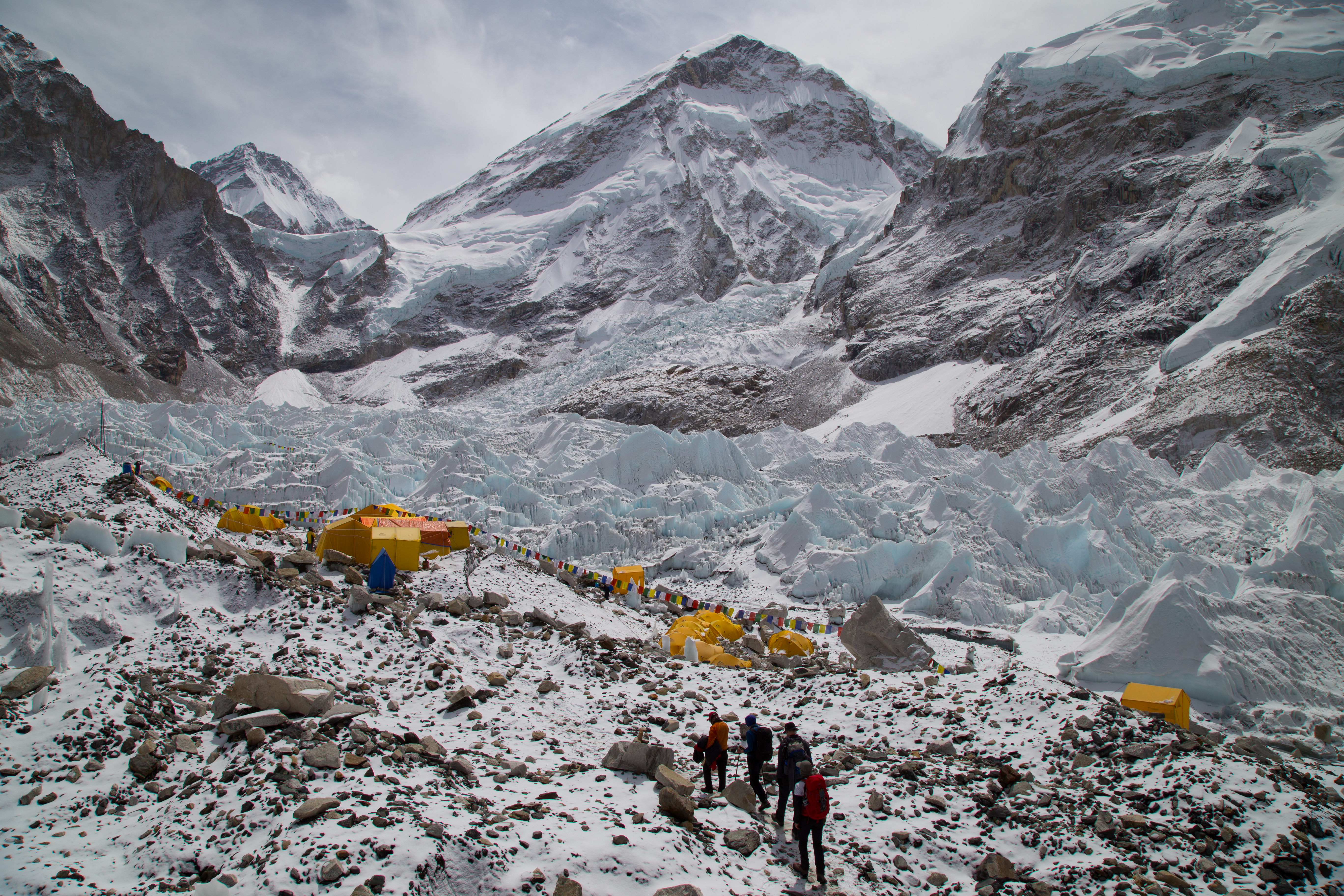
The Everest Base Camp trek is legendary, offering breathtaking panoramic views, towering peaks, and an immersive experience in Sherpa culture. Situated in the Solu-Khumbu region, the area is renowned not only for Everest but also for its traditional Sherpa villages, ancient monasteries, rich flora and fauna, and thrilling mountaineering history. The main goal for many trekkers is reaching Everest Base Camp at 5,430 meters, often combined with a hike to Kala Patthar for unforgettable sunrise views.
2) Kanchenjunga Region (8,598 meters)
Kanchenjunga, the third highest mountain in the world, rises to 8,598 meters (28,198 ft) and is located in eastern Nepal along the borders of Sikkim (India) and Tibet. Known as the “Treasure of Snow,” this remote and restricted trekking region offers pristine landscapes, dramatic Himalayan scenery, and peaceful mountain villages.
First climbed by a British expedition in 1956, Kanchenjunga trekking rewards adventurers with views of the Jannu Himal range, high mountain passes like Mirgin La, and rare wildlife such as the Snow Leopard, Musk Deer, Blue Sheep, and Nepal’s national bird. Compared to Everest and Annapurna, this region remains less crowded and truly off-the-beaten-path.
3) Lhotse (8,516 meters)
Lhotse, the fourth highest mountain in the world, reaches 8,516 meters and lies immediately south of Mount Everest. Connected to Everest by the South Col, its dramatic ridge never drops below 8,000 meters.
Often mistaken as Everest’s south peak, Lhotse was first successfully climbed in 1956 by Swiss climbers Fritz Luchsinger and Ernst Reiss. The mountain also includes subsidiary peaks such as Lhotse Shar and Nuptse, adding to the dramatic skyline of the Khumbu region.
4) Makalu (8,463 meters)
Standing at 8,463 meters, Makalu is the fifth highest mountain in the world and lies about 14 miles east of Everest. Famous for its striking four-sided pyramid shape, Makalu is one of the most visually spectacular Himalayan peaks.
Due to its steep ridges and technical difficulty, Makalu is considered a challenging climb. The first successful ascent was made by a French expedition in 1955. Nearby Chomo Lonzo is a notable subsidiary peak rising just north of Makalu.
5) Cho Oyu (8,201 meters)
Cho Oyu, the sixth highest mountain, rises to 8,201 meters and is located west of Everest along the Nepal–Tibet border. Close to the historic Nangpa La Pass, it has long been an important trade route between Sherpas of Khumbu and Tibet.
Cho Oyu is often regarded as the most accessible 8,000-meter peak, making it popular among high-altitude climbers. It was the third 8,000-meter mountain ever climbed and the first to be ascended in autumn.
6) Dhaulagiri (8,167 meters)
With an elevation of 8,167 meters, Dhaulagiri, meaning “White Mountain,” is the seventh highest peak in the world. Located in north-central Nepal, it was once believed to be the world’s highest mountain after its discovery in 1808.
The Dhaulagiri massif features vast glaciers, icefalls, and rugged ridges stretching nearly 30 miles. Several of its subsidiary peaks also rise above 25,000 feet, adding to its dramatic presence in the Himalayan landscape.
7) Manaslu (8,163 meters)
Manaslu, the eighth highest mountain in the world, stands at 8,163 meters and dominates the Gorkha massif in western Nepal. Located east of Annapurna, it offers stunning ridges, valley glaciers, and diverse trekking routes.
The name Manaslu comes from the Sanskrit word “Manasa,” meaning “Mountain of the Spirit.” A historic moment in mountaineering occurred when an all-female Japanese expedition became the first women to summit an 8,000-meter peak here.
8) Annapurna (8,091 meters)
Annapurna, rising to 8,091 meters, is the tenth highest mountain in the world and holds a special place in mountaineering history. In 1950, it became the first 8,000-meter peak ever climbed.
Located near the world’s deepest gorge carved by the Kali Gandaki River, the Annapurna massif features massive glaciers on its western and northwestern slopes. The name Annapurna means “Goddess of Harvests”, symbolizing nourishment and abundance. Among its many peaks, Annapurna I and II stand prominently at opposite ends of the massif.
If you are seeking an adventurous, fun-filled, and truly unforgettable experience, trekking in Nepal is...
Surely, trekking to mountains is different. But, you are not climbing the mountains. There is...
If you are looking for an adventurous, fun-filled, memorable experience, trekking in Nepal is definitely...




Comments (0)