- 07 Jan, 2026

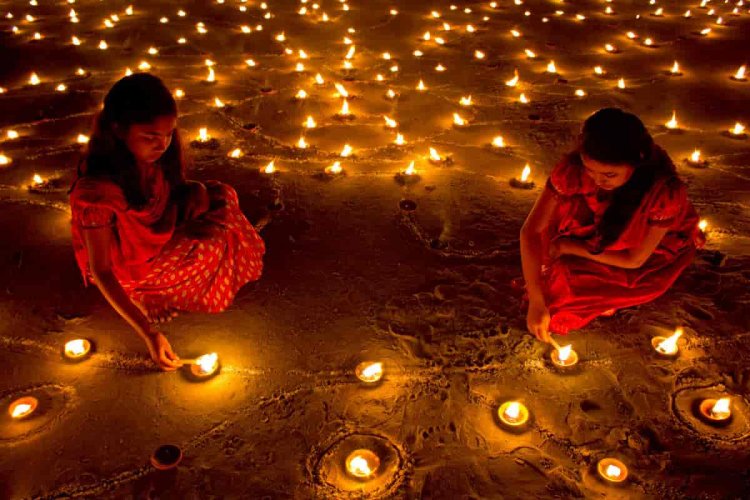
Tihar is the second major festival celebrated in Nepal and is observed across the country with lights, music, and delicious food. It is known by several names such as Dipawali, meaning the festival of lights, and Panchak Yama, referring to the five days dedicated to Lord Yama, the God of Death. Because several animals are worshipped during this festival, Tihar is also popularly called the festival of animals. Among the Newar community, one of Nepal’s indigenous groups, Tihar is known as Swonti.
Tihar is celebrated over five days, and the rituals performed each day may vary slightly depending on cultural background, family traditions, and local customs. This variation can sometimes make the festival seem complex, but at its heart, Tihar is deeply connected with the themes of life and death. It celebrates life in a joyful and colorful way while being closely associated with Lord Yama, the God of Death.
According to legend, Lord Yama was always busy with his duties and rarely had time to meet his twin sister, Yamuna (also known as Yami). Longing to see her brother, Yamuna first sent a crow to call him, but he did not come. She then sent a dog, followed by a cow, yet Yama still failed to appear. Finally, Yamuna decided to go herself. When the siblings finally met, Yamuna performed a special ritual by drawing a circle of oil around Yamaraj, placing a garland of makhmali (globe amaranth) flowers around his neck, and applying a tika made of five different colors on his forehead. She then told her brother that he could not leave until both the oil and the garland had dried. Since this would take a very long time, they spent many joyful moments together, talking and laughing. Several other stories related to Tihar also revolve around Yamaraj and the idea of escaping or postponing death.
The first day of Tihar is known as Kag Tihar or Kag Puja, dedicated to crows. Crows are believed to be messengers of death, so they are worshipped to keep sorrow and bad news away from the household. Families prepare delicious food and place a portion of it on rooftops or open spaces as offerings for the crows.
The second day is Kukur Tihar, the day of dogs. Dogs are considered loyal guardians of homes and are also believed to guard the underworld. Both pet dogs and street dogs are honored on this day by offering them tasty food, applying tika on their foreheads, and placing flower garlands around their necks. Many dog owners also buy new clothes, collars, or beds for their dogs.
The third day is dedicated to Lakshmi Puja, also known as Saa Puja, honoring the cow. The cow is believed to guide the soul to the afterlife and is also regarded as a form of Goddess Lakshmi, the goddess of wealth and prosperity, because of the nourishment she provides. Cows are worshipped with tika, garlands, and special food. In the evening, Goddess Lakshmi is worshipped in homes. A mandala is drawn at the entrance, and a trail made of red mud leads from the gate to the prayer room to invite the goddess inside. Houses are beautifully decorated with oil lamps and electric lights. Groups of girls go from house to house singing Bhailini or Bhailo songs, wishing prosperity to the families, who in return offer money and sweets.
The fourth day of Tihar is observed as Goru Puja, the worship of oxen, which are believed to be the vehicle of Lord Yama. Oxen are honored in the same way as other sacred animals. On this day, followers of Lord Krishna perform Gobardhan Puja, creating a small hill made of cow dung to represent Mount Gobardhan, which Krishna lifted to protect people from the wrath of Lord Indra. Among the Newar community, this day is marked by Mha Puja, a ritual of self-worship. Family members sit in a line from the eldest to the youngest and perform rituals to pray for good health, longevity, and spiritual well-being. This day also marks the New Year for Newars according to the Nepal Sambat calendar. In the evening, groups of boys go around singing Deusi songs, blessing households and receiving money and sweets in return.
The fifth and final day of Tihar is Bhai Tika, dedicated to the bond between brothers and sisters. Sisters either visit their brothers or welcome them into their homes, depending on tradition. They apply a seven-colored tika on their brothers’ foreheads, wishing them long life and protection. Sisters prepare special meals and gift spices, fruits, and sweets to their brothers, while brothers give gifts or money in return. This day symbolizes the reunion of Yami and Yama and marks the conclusion of the Tihar festival.
Although Tihar lasts for five days, the official public holiday begins on the third day. During the festival, people celebrate by lighting oil lamps, decorating their homes, playing cards, and enjoying fireworks. Gambling is traditionally permitted during Dashain and Tihar, and families and friends gather to enjoy the festive atmosphere, making Tihar one of the most joyful and meaningful festivals in Nepal.
If you are seeking an adventurous, fun-filled, and truly unforgettable experience, trekking in Nepal is...
Surely, trekking to mountains is different. But, you are not climbing the mountains. There is...
If you are looking for an adventurous, fun-filled, memorable experience, trekking in Nepal is definitely...







Comments (0)