

 Package Overview
Nestled in the folds of the Eastern Himalayas, remaining in self-imposed isolation for centuries, Bhutan opened up to the world in a glacial pace. The population lived in close harmony with nature, evolving a unique identity, derived largely from a rich religious and cultural heritage. This country of 700,000 people, roughly the size of Switzerland, is the world’s only Mahayana Buddhist country. The Buddhist respect for all sentient beings helped Bhutan protect its pristine ecology and wildlife.
This self-sufficient population was never colonized and had limited contact to the outside world. Buddhism was established in the 8th century by the Indian saint Padmasambhava, popularly known in the Tantric tradition as Guru Rinpoche. Perhaps the most dynamic era in Bhutanese history came in the 17th century with the arrival, in 1616, of Zhabdrung Ngawang Namgyal, the great leader of the Drukpa school of Mahayana Buddhism. He unified the country and established the foundations for national governance and the Bhutanese identity.
In 1907, a historic Assembly of the clergy, the official administration, and the people unanimously elected Gongsar Ugyen Wangchuck as the first hereditary King of Bhutan thus beginning the glorious era of the Wangchuck dynasty. In 2006, the fourth king of Bhutan, Jigme Singye Wangchuck announced that he would abdicate in favor of a constitutional monarchy with a parliamentary democracy. In 2008, the year that marked 100 years of the monarchy saw two important events; the first democratic elections and the coronation of the fifth king, Jigme Khesar Namgyel Wangchuck.
Facts and Figures
Land area : 38,394 square kilo metres
Forest area : 72.5 %
Altitude : between 240metres and 7541metres above sea level
Inhabitants : 700,000
Language : official language “Dzongkha”, English widely spoken
Religion : Vajrayana stream of Mahayana Buddhism (Also known as Tantric Buddhism)
Currency : Ngultrum (equal to Indian Rupee)
Capital : Thimphu
National Tree : Cypress
National Bird : Raven
National Flower : Blue Poppy
National Sport : Archery
National Animal : Takin
Local time : Six hours ahead of GMT and half an hour ahead of Indian Standard Time
 Trip Itinerary
The tour begins with a scenic flight to Paro, the valley town, just west of Thimphu - the capital of Bhutan. As you look down from your window, you will witness the stunning views of Paro Dzong and the surrounding Himalayas. Upon your landing in Paro, our Bhutanese guide from Amen Bhutan Travel will come to welcome you and escort you to your hotel. After some rest and refreshment, you will be briefed on the trek itinerary.

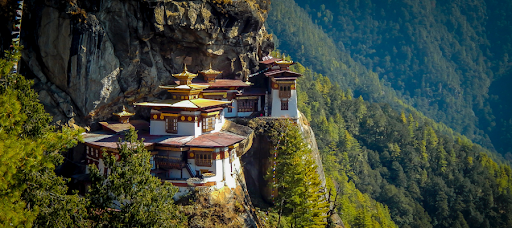
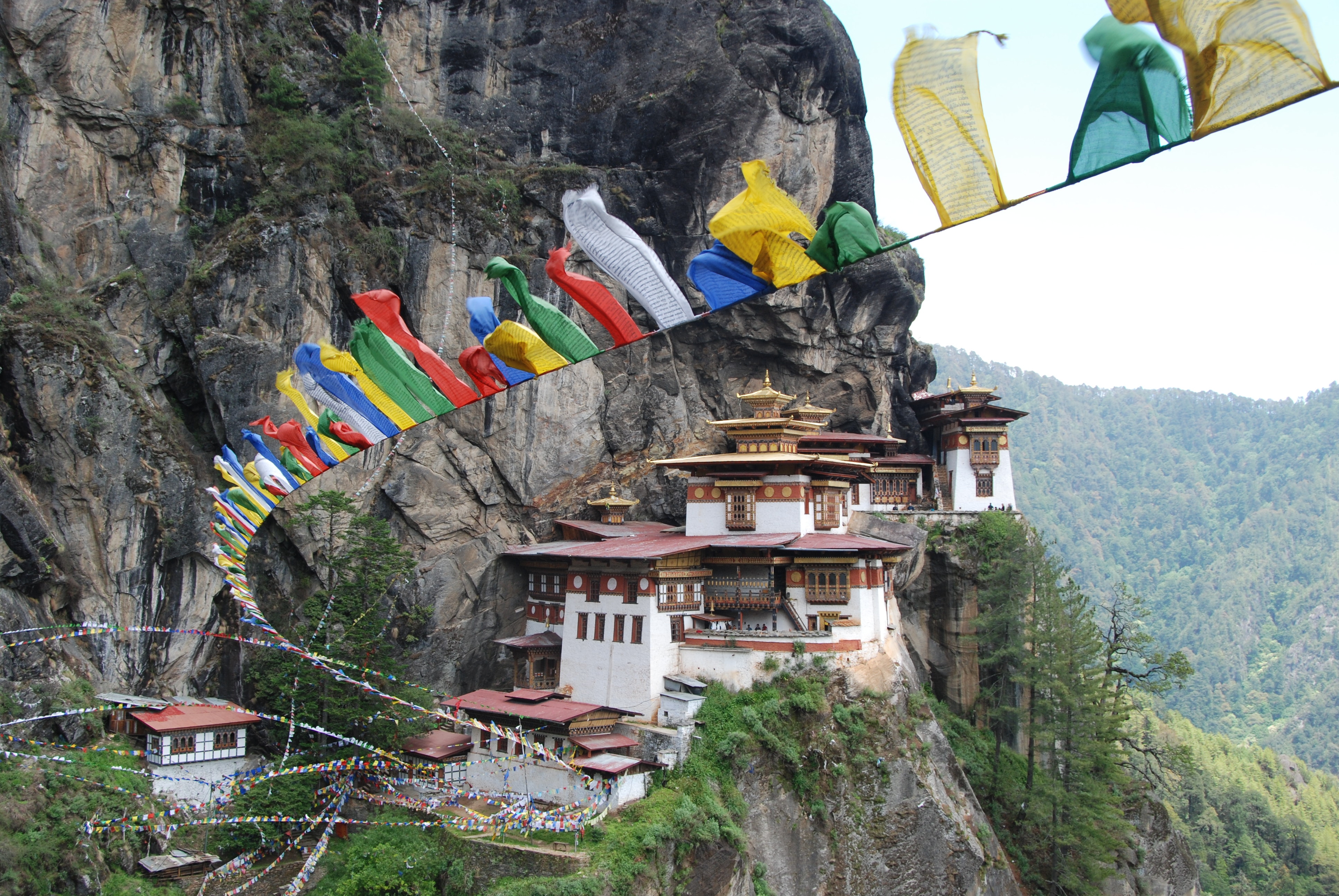
Early in the morning, after having breakfast, you will hike to the Tiger’s Nest Monastery. The hike takes a 900m steep ascend and about four to five hours to reach the monastery. On the way to the monastery, you will be enchanted by the pine forest and the calming sound of the player flag fluttering with the swift wind. You’ll even walk past temples and a sacred pool.
The mesmerizing monastery, seemingly sitting on the edge of a cliff, is perhaps the most famous in Bhutan. It is also known as Paro Taktsang or Taktsang Palphug Monastery. The evening is free to spend as you wish.
The trail follows a ridge and on a clear day the view of the mountains and valley are simply stunning. The campsite is close to the Jimgelang Tsho Lake. This lake is known for its giant sized trout.
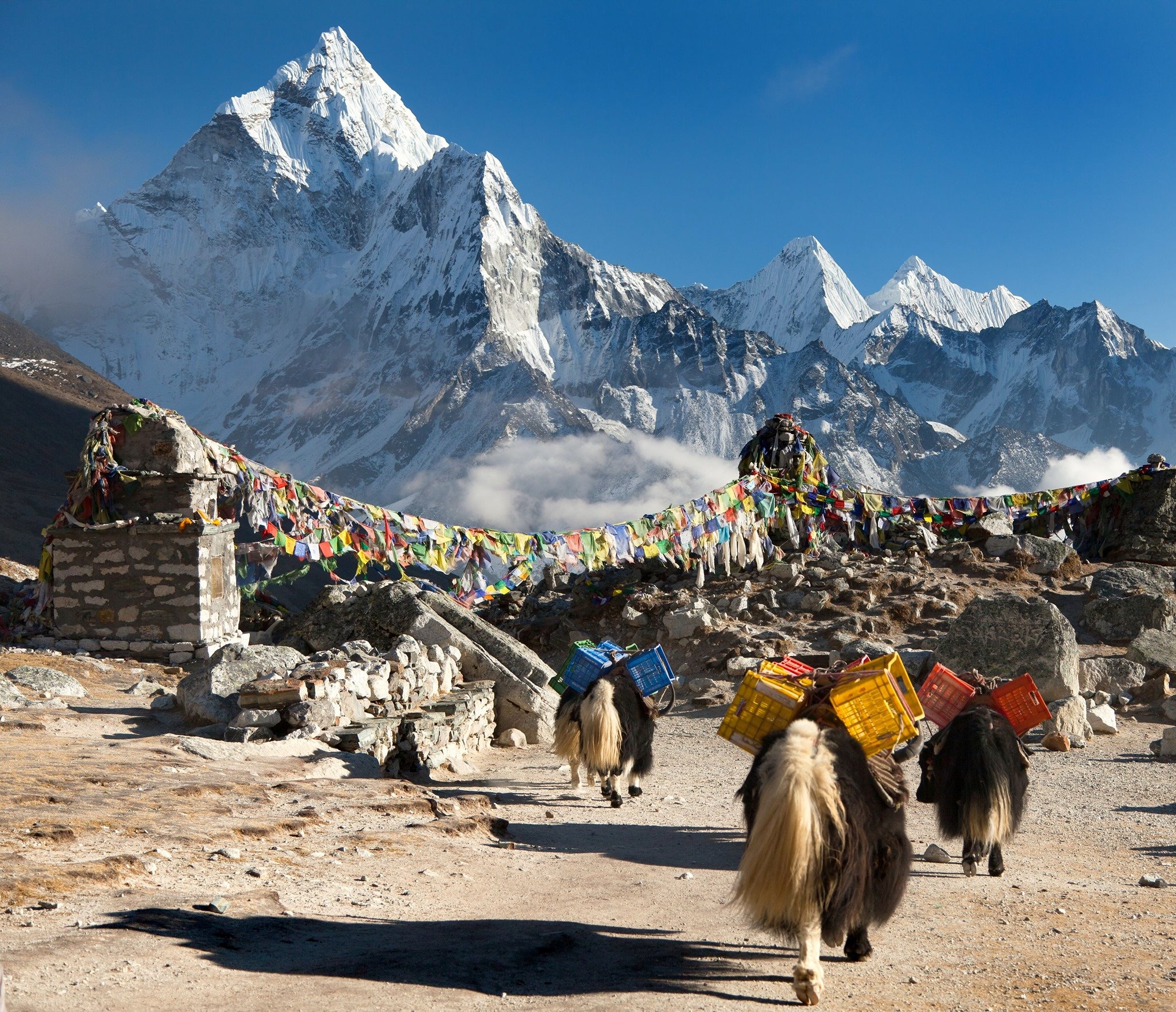
The trail takes you through dwarf rhododendron trees and past Janetso Lake. You may come across some yak herder camps where you will have the opportunity to get a glimpse of a nomad’s life. The campsite is close to Simkotra Tsho Lake.
After a heavy breakfast, you will head towards Thimphu. The trail starts with a steady climb and enticing views of Mt. Gangkar Puensum in the backdrop. Then a downhill hike takes you to Phajodhing. From Phajodhing Monastery, Thimphu is visible. You continue taking a downhill trail and walk through the pine forest to reach the road above Takin Sanctuary. Your trek ends here as you hop on the ride with the driver towards the hotel.
After breakfast visit the Institute for Zorig Chusum (commonly known as the Painting School) where students undergo a 6-year training course in Bhutan’s 13 traditional arts and crafts.
Later visit Textile Museum, which provides insight into Bhutan’s one of the most distinct art form.
Then Buddha Point (Kuensel Phodrang). Located at a short drive from Thimphu city centre, visitors can get a good overview of the Thimphu valley from the Buddha point (KuenselPhodrang). You can pay your obeisance and offer prayers to the Buddha, the largest statue in the country and then walk around and take a glimpse of the valley.
King's Memorial Chorten continuously circumambulated by people, murmuring mantras and spinning their prayer wheels. Construction of this landmark was the idea of Bhutan’s third king, His Majesty Jigme Dorji Wangchuk (“the father of modern Bhutan”) who has wished to erect monument to world peace and prosperity. Completed in 1974 after his untimely death, it serves both as a memorial to the Late King and as a monument to peace.
Trashichhoedzong: This impressive fortress/monastery houses Secretariat building, the throne room of His Majesty, the King and various government offices. It is also the summer residence of Chief Abbot and central monk body.
Drive to Paro and enroute visit Tamchogang Lhakhang “the temple of the excellent horse”. It is a private temple, built in 15th century, as the result of visitation from Balaha, the excellent horse, a manifestation of Chenrezig, the compassionate Buddha.
On arrival in Thimphu, check into the hotel. The capital town of Bhutan and the centre of Government, religion and commerce, Thimphu is a unique city with unusual mixture of modern development alongside ancient traditions. With the population of about 90,000 it is perhaps still the world’s only capital city without a traffic light.
Evening an exploratory walk around Paro Main Street and market area.
After early breakfast at the hotel, drive to the airport for flight to your onward destination. Our representative will help you with exit formalities and then bid you farewell.
 Cost Includes/Excludes
 Other Informations
Vehicle Envisaged:
3 * Hotel Envisaged:
4* Hotel Envisaged:
Documents require for visa:
 Note
NoteDruk Path Trekking - Info
The Druk Path Trek, which connects Bhutan’s current capital, Thimphu, with its historical capital, Paro, is steeped in the mythos and majesty of Bhutanese culture, presenting trekkers with a series of profound and picturesque experiences.
Additional Aspects of the Druk Path Trek:
Cultural Immersion:
Flora and Fauna:
Environmental Awareness:
Physical Preparation:
Weather Considerations:
Travel Logistics:
Overnight Accommodations:
Connectivity:
Photography Opportunities:
Acclimatization:
The Druk Path Trek is more than a trek; it's a cultural odyssey and an intimate exploration of Bhutan's heartlands, a path where each step unfolds new panoramas and perspectives, making it a must-do for those seeking the spirit of adventure in the Himalayas.
 Sweet Memories